


In May 2025, The Bahá’is of Malawi elected their National Spiritual Assembly alongside all other countries worldwide.
The Bahá’í election process is a sacred practice rooted in spiritual principles, emphasising prayerful reflection, selflessness, and the collective search for individuals who exemplify integrity, wisdom, and a capacity to serve. The elections are uniquely devoid of campaigning or nominations. Voters silently and privately, in a prayerful mode, select those they feel are best suited to foster unity and advance the common good.
To those who equate elections with divisiveness and taking sides, the Baha’i electoral process may seem like an unattainable ideal, but is demonstrated in action at the Baha’i National Conventions that occur annually during the Ridván period.
This reverence is exemplified through a two-stage electoral process: first, electing delegates through local ballots in their unit conventions, followed by those delegates prayerfully selecting members of the National Spiritual Assembly. This harmonious and consultative approach underscores the Bahá’í commitment to divine guidance and collective decision-making, elevating elections beyond mere procedure to an act of worship and trust in humanity’s potential.
In Malawi, Baha’is representing 11 geographic units across the country gathered at the National Baha’i Centre in Area 14, Lilongwe for their National Convention. They elected National Spiritual Assembly of the Bahá’is of the Malawi, a nine-person assembly that will guide the affairs of the national Baha’i community for the coming year.

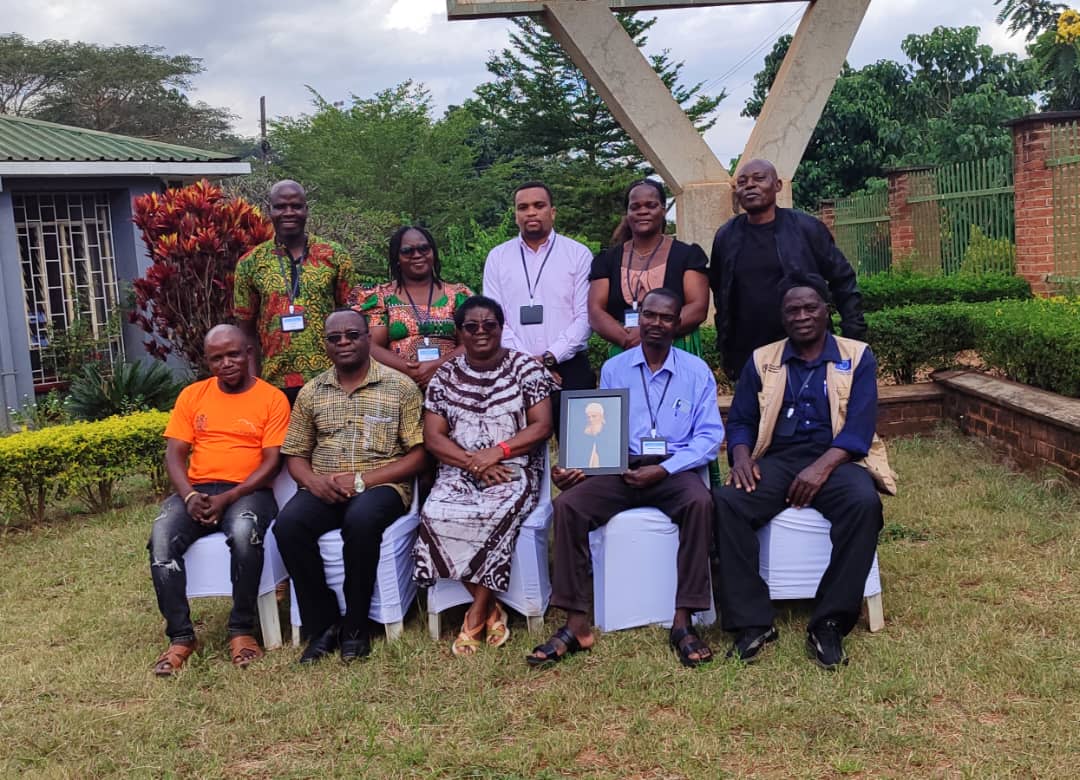
The elected National Spiritual Assembly of Bahá’is of Malawi with resident Counsellor, Mrs. Maina Mkandawire
Standing: Mr. Hussein A. Bakali, Mrs. Dorothy Matabwa, Mr. Mwayi Mkanthama, Ms. Margret Nyoni, Mr. Timothy Kuwale
Seated: Mr. Petros Swira, Mr. Clifford Mkanthama, Mr. Chimenya Phiri, Mr. Juma Mkandawire
Delegates may vote for any adult member of the Malawian Baha’i community who possesses the necessary qualities of selfless devotion, a well-trained mind, recognised ability and mature experience.
Delegates and those elected to serve on local and national Baha’i institutions offer this service as volunteers and are generally not compensated for this service.
Every five years, the National Convention is held in late May due to the international convention at the Baha’i World Center in Haifa, Israel, where members of more than 180 National Assemblies from around the world gather to elect the Universal House of Justice, the international governing body of the Bahá’í Faith.
The election of the first Universal House of Justice in 1963 very likely constituted history’s first global democratic election. Each of the successive elections since then has been carried out by an ever broader and more diverse body of delegates, representing a cross-section of the entire human race.
This new model of governance serves as an antidote to apathy, alienation, and despair. It is a model for a positive and practical means of governing a just and unified global society.